
Was there really a Kilroy, as in ‘Kilroy Was Here’?
As I sit here at my desk, on a Thursday morning (the day I write this silly stuff), looking out my office window, I realize … It’s not spring yet.
As I sit here at my desk, on a Thursday morning (the day I write this silly stuff), looking out my office window, I realize …
It’s not spring yet.
We just got started with winter what, a month ago? And here I am, waxing poetic for spring already.
Be gone, cold air! Be gone, winter weather! Be gone, gray skies!
Did it work? Did I banish them from where you are? I ask because, well, it didn’t work here.
No matter. The warmer days will come. As will the trivia … right now, for that matter. Enjoy!
Did you know …
… the correct answer to an old, old question? You’ve no doubt heard the old saw, “If a tree falls in a forest and there’s no one there to hear it, does it make a sound?” Well, the answer is actually “no.” Sound is a sensation excited in the ear when air or other medium is in motion, and if there is no ear there to be excited, there’s no sound. (Thanks to Mason for the tip!)
… you may know a pozzee-wallah? In fact, you might even be one. What’s a pozzee-wallah, you ask? That’s a person who is very fond of jam. The slang term was used in the early 20th Century. (Using it today might get you a punch in the nose. I’m just saying.)
… the first network television series to be filmed in color was made in 1955? That year, a show called Norby premiered on NBC. The comedy series, about a small-town bank vice president and his family, starred David Wayne (1914-1995) in the title role. It lasted thirteen episodes and was cancelled due to the then-high cost of using color film and a lack of affiliates which had the show’s time slot open. Additional trivia note: Norby was shot on Eastman Kodak film, and Kodak was the show’s sponsor as well. The first series of any kind to be filmed in color was The Cisco Kid, a syndicated western which ran from 1950 to 1956. (Peacocks must have been in black and white back then.)
… newborn human babies cannot taste salt at birth? The ability to detect salt develops at about four months of age. (That’s a rather salty thing to think about.)
… Japan has the world’s dullest theme park? Well, probably not, but what would you call a theme park where children can experience all the thrills of adulthood – working, banking, and such – other than dull? It’s called KidZania, and it’s not just located in Japan. Sixteen such parks can be found around the world, each of them a two-third-scale indoor town staffed by children ages four to fifteen. The idea is to learn how to handle adult life. One of the “attractions” that has the highest participation is the car rental office. (No comment.)
… Kilroy, of “Kilroy was here” fame, really existed? During World War II, the most commonly seen piece of graffiti was the phrase, “Kilroy was here,” along with a sketch of someone seeming to peer over a wall. But who in the world was Kilroy? It turns out that the saying originated with one James Kilroy (1902-1962), a worker at the Fore River Shipyard in Massachusetts. Kilroy’s job was to check rivets in ships, and he would mark them with chalk. But when he went off duty, other riveters would erase the mark, and they’d end up getting paid double for their work. So to ensure the rivets were properly counted only once, he added “Kilroy was here” and later created the doodle of the long-nosed person looking over the wall. The marks weren’t always covered with paint due to the speed at which ships were being built for the war, so the graffiti made it overseas and became a trademark for American forces. Additional trivia note: A story that went around after the war had an outhouse built at Potsdam for the exclusive use of the heads of state meeting there. The first person to use it was Joseph Stalin (1878-1953), who allegedly emerged and asked an aide in Russian, “Кто такой Килрой?” (“Who is Kilroy?”).
… the first president to ride in a self-propelled vehicle was William McKinley? It happened in Buffalo, New York, on September 6, 1901, when McKinley (1843-1901) was being taken to a hospital after being shot by an assassin. An electric ambulance transported the President, who died eight days later. (I doubt that McKinley appreciated the novelty of the vehicle at the time.)
… the city of London pays rent to the monarch? No, not for the entire city, but for a couple of small pieces of property, one in Shropshire and the other near the Royal Courts of Justice. The rent is pretty reasonable, and hasn’t changed over the last 800 years – an ax, a knife, six horseshoes, and sixty-one nails. No one outside of the Royal family knows the exact location of the land, either. (I’m not sure what His Majesty does with that loot, but it’s a pretty cheap rent nonetheless.)
… the first military engagement of the Revolutionary War had a very low death count? When British and Colonial forces squared off at Lexington, Massachusetts, on April 19, 1775, a total of eight men were killed, all in the Colonial forces. Another ten were wounded. The British had only one casualty, a man shot in the leg. Often considered the first battle of the war, it was more of a minor skirmish. Additional trivia note: This first engagement also had something modern battles do not have – a voluntary audience. Between 40 and 100 spectators watched the encounter from the side of the road.
… real skeletons were used as movie props in a popular film? Producers of the movie Poltergeist, released in 1982, used actual human skeletons for the climactic scene in the haunted family’s back yard. Asked why they used actual human skeletons, the producers said simply, “They were cheaper than plastic ones.” (Try telling that to the families of the original owners of the bones.)
Now … you know!
Before you go...
Thanks for reading The Houston Home Journal — we hope this article added to your day.
For over 150 years, Houston Home Journal has been the newspaper of record for Perry, Warner Robins and Centerville. We're excited to expand our online news coverage, while maintaining our twice-weekly print newspaper.
If you like what you see, please consider becoming a member of The Houston Home Journal. We're all in this together, working for a better Warner Robins, Perry and Centerville, and we appreciate and need your support.
Please join the readers like you who help make community journalism possible by joining The Houston Home Journal. Thank you.
- Brieanna Smith, Houston Home Journal managing editor
Paid Posts
Author

Related Articles
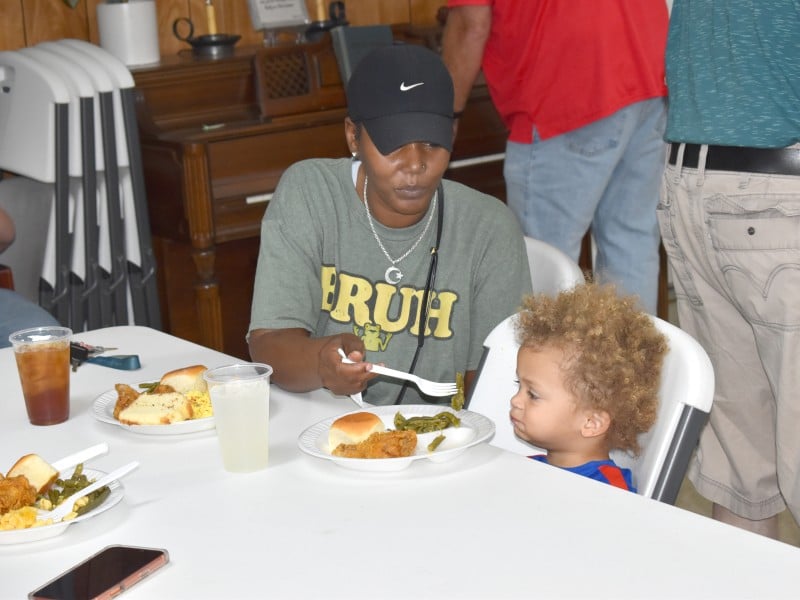
Women Reaching Our Community offers ‘free lunch and fellowship’
For Women Reaching Our Community, it is about a “free” lunch, but it is also about so much more!
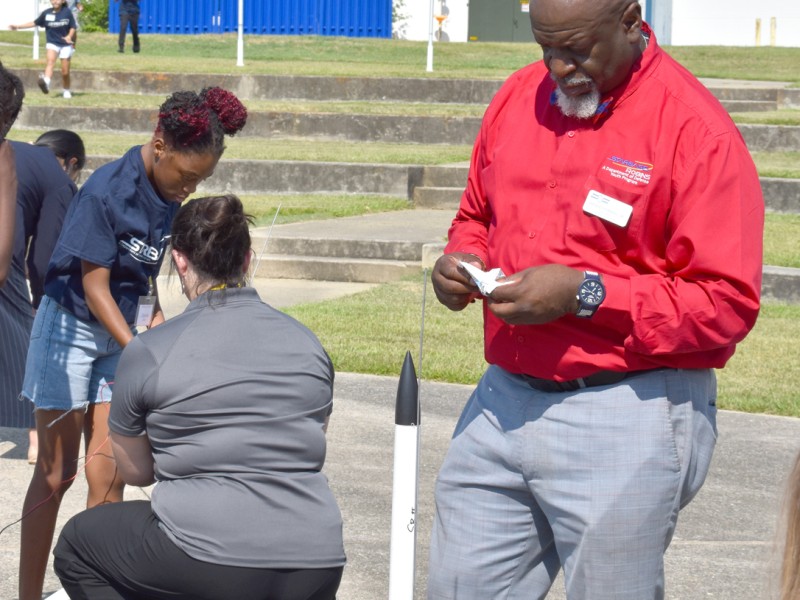
Great futures STEM from Starbase Robins
Starbase Robins offers education and fun.

* Fervently Pray For And Over Your Children *
Greetings and blessings! Unfortunately, nowadays the ugly, destructive devil is extremely busy trying to devout/destroy our younger generation. So, out of an abundance of love and concern; I’m literally pleading with families to spend time praying for our children.