
Waverly Hall Unveils New Historic Marker
Last week, town maintenance workers celebrated the installation of a brand-new historical marker, replacing an original sign that had been damaged and missing for several years.
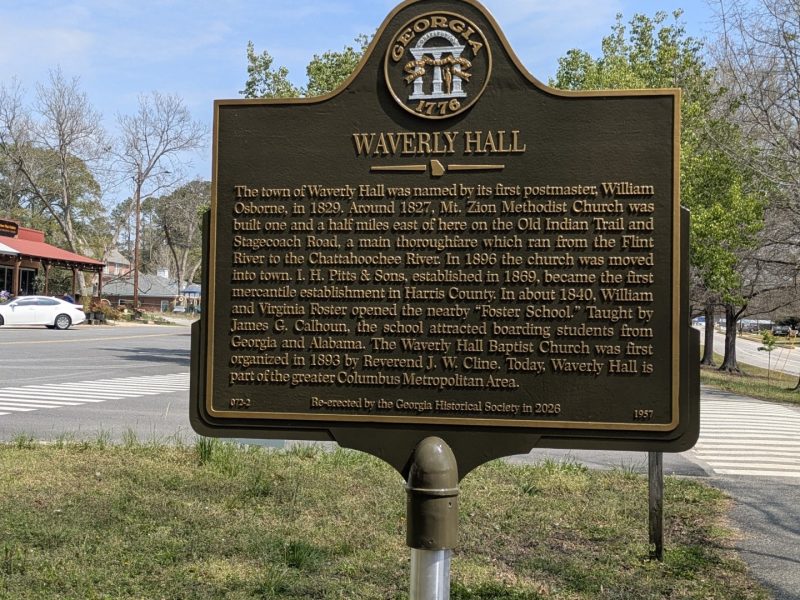
Last week, town maintenance workers celebrated the installation of a brand-new historical marker, replacing an original sign that had been damaged and missing for several years.

The City of Hamilton has planned an event that will prove to be fun for all ages. The event, titled Under the Magnolias: Seal-E-Bration on the Square is scheduled for Saturday, Apr. 25 from 10 a.m. until 4 p.m.
The Harris County School District (HCSD) has presented the results of stakeholder input to the Board of Education, and the 2027–2028 academic calendar has been officially approved. “Over the past few years, we’ve developed a formula for setting the academic calendar that works well for our district. With this approach, we aim to provide calendars two years in advance,” shared HCSD K–5 Curriculum Director David Dennie. “After gathering additional input from stakeholders, the Board of Education has approved the Version A calendar option for the 2027–2028 academic year.”

April is upon us, and that can only mean one thing. Showers? Nope. Flowers? Nope. Baseball? Yes, but not in this context. It means that it's time for the annual April Fool edition of the column. Three of the items in this week's collection were totally made up by me, and your mission (should you choose to accept it) is to determine which ones they are. No prizes are offered because I'm a senior citizen on fixed income (i.e., a cheap so-and-so), but you would at least win the glory of knowing that I can't fool you. If you want, you can send your guesses to me at my e-mail address: didyouknowcolumn@gmail.com and I'll let you know how many you got right. The game's afoot!
Returning to the 1965, television series Lost in Space, another planet mentioned in the series was Ganymede, which according to the show was inhabited by crystal creatures. There is no planet named Ganymede, but there could have been. Ganymede is actually a moon that orbits the planet Jupiter. It is the largest moon in our Solar System, about twice as massive as Earth’s moon, and is physically larger than the planet Mercury. It is composed of silicate rock and water, and its internal ocean is thought to contain more water than all of Earth’s oceans combined. Because of that water there is the potential of life on or in Ganymede

A major announcement in a competing media field was made last week, and the word really made me upset. On May 22, CBS Radio News will shut down, after almost 100 years of operation. The news operation that brought us Edward R. Murrow, Walter Cronkite, and Dan Rather is going away because of “changes in listening habits and economic challenges.” Most of you reading this already know that I have been in broadcasting for what will be 50 years in June. I’ve worked at three radio stations, none of which ever were CBS affiliates, at least while I was there. So any personal interaction with CBS Radio News has never actually happened; I have never interacted with Mr. Murrow, Mr. Cronkite, or Mr. Rather. But I still have vivid, fond memories of CBS Radio News. When I was a little boy in Chicago, some dear friends of our family would have it on every time we visited them.
Last week I wrote about House Bill 1009, a law that would ban students from having cell phones during the day at school. I stated that the Georgia House has approved the law and it was waiting for a Senate vote. Well, the Senate voted unanimously to approve the Bill. I also state in the column the Bill was not without controversy and that some educators opposed the ban of phones because it was a battle they did not want to fight and I can understand that for several reasons. I pointed out in the column a case that might shed light on why educators opposed the ban.
There is something under development much more concerning than data centers, With the attention of so many people on opposing data centers, and understandably so, people are missing something connected to data centers that could prove incredibly dangerous. Over a period of some time Boston Dynamics has been developing robots. Not to be confused with single-function, limited-purpose robots found in manufacturing plants and fast-food restaurants, the company’s rapid advancements in quadrupedal and bipedal robots have been nothing less than astounding. The quadrupedal robot, with a shape similar to a canine or feline, has been displayed on numerous occasions. There are robots based on nature’s design of other creatures that are under development. Advancements have been made to nanobots, so small they can be inserted into a person’s bloodstream.

In 1965, the television series Lost in Space premiered. Originally filmed and aired in black and white and taking place in 1997, the Robinson family along with a US Space Corps Major and a B-9 environmental control robot are launched into space with the goal of reaching an Earth-like planet orbiting Alpha Centauri. The mission goes awry quickly as a saboteur sabotages the robot’s controls, but is then trapped on the spacecraft during launch. His weight, along with the robot smashing the spacecraft’s controls, sends it off course and – as the name implies – lost in space.
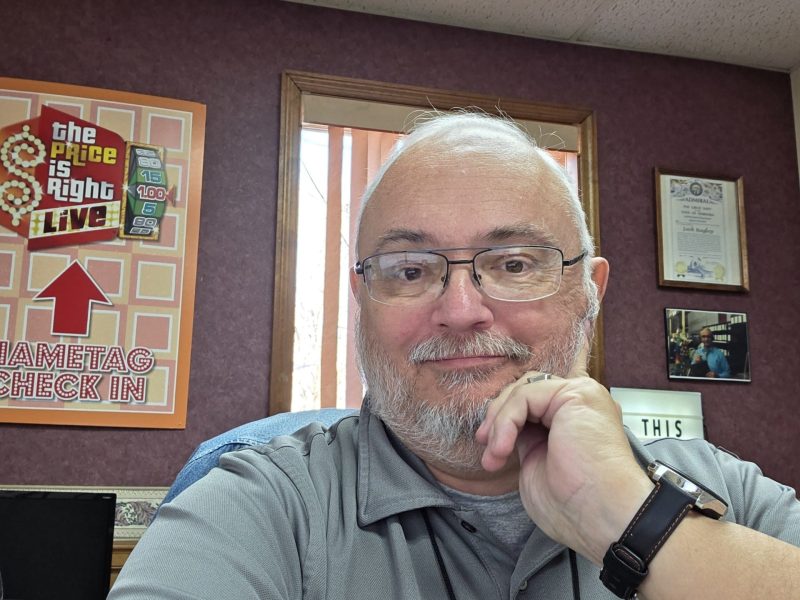
The weekend of March 7th and 8th, we did the semi-annual ritual of advancing our clocks one hour, as Daylight Saving Time began. The result reminded me why I totally despise the entire idea of Daylight Saving Time. First of all, we aren’t actually saving anything. The idea of setting our clocks forward one hour to “gain” an hour of daylight implies that there’s extra light out there to grab. There isn’t. What we’re doing is making sunrise later, so sunset is later, or some such silliness as that. It’s like taking a blanket, cutting one foot off the end, sewing it onto the other end, and saying your blanket is a foot longer. (Thanks to my Native American brethren for that metaphor; I like it a lot.)